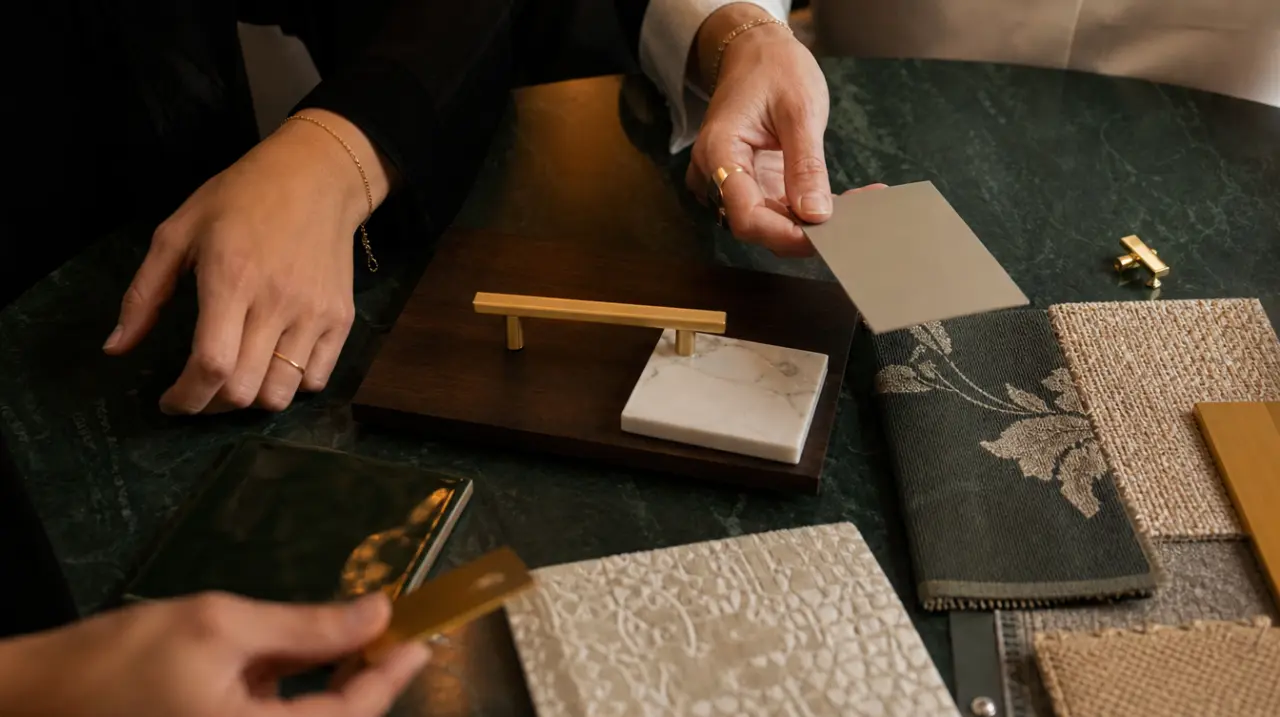
FF&E in hospitality is the furniture, fixtures, and equipment that turns a finished building into an operating hotel: the movable, capitalized property that a guest sees, touches, and sits on, kept distinct from the structure it fills and from the consumable supplies the hotel replenishes. Every lodging asset lives or dies by its FF&E, because it is what the guest actually experiences and what a brand grades against its standards. For owners and asset managers, FF&E is where design ambition, brand compliance, capital discipline, and replacement planning all meet.
What makes hospitality FF&E distinct
FF&E exists in offices, retail, and healthcare too, but hospitality FF&E carries pressures those sectors do not. Hotel FF&E is subject to brand standards, it is graded on a rolling renovation cycle, it takes punishing daily use from a constant turnover of guests, and it is underwritten as an income-producing asset. A guestroom chair is not just furniture, it is a line in a brand’s specification, a driver of the guest’s rate expectation, and an asset that must be reserved for and replaced before it degrades the property’s competitive position. That combination is why hospitality treats FF&E as a managed discipline with its own budgets, schedules, and specialists rather than a one-time purchase.
For the base definition and the components of the acronym, see what is FF&E and what does FF&E stand for.
FF&E area by area
A hotel’s FF&E package is organized by area, because each zone has its own specification, cost profile, and replacement rhythm.
Guestrooms are the largest and most repeated package. Beds, headboards, nightstands, desks and chairs, lounge seating, luggage benches, casegoods, wardrobes, decorative lighting, mirrors, artwork, window treatments, televisions, safes, and minibars are all specified once and multiplied across the room count. Casegoods and seating dominate the cost.
Guest bathrooms contribute FF&E in the form of mirrors, decorative lighting, and accessories, distinct from the plumbing fixtures that are built-in construction.
Corridors and circulation carry runners, wall art, and lighting that take heavy wear and are often refreshed with the guestrooms.
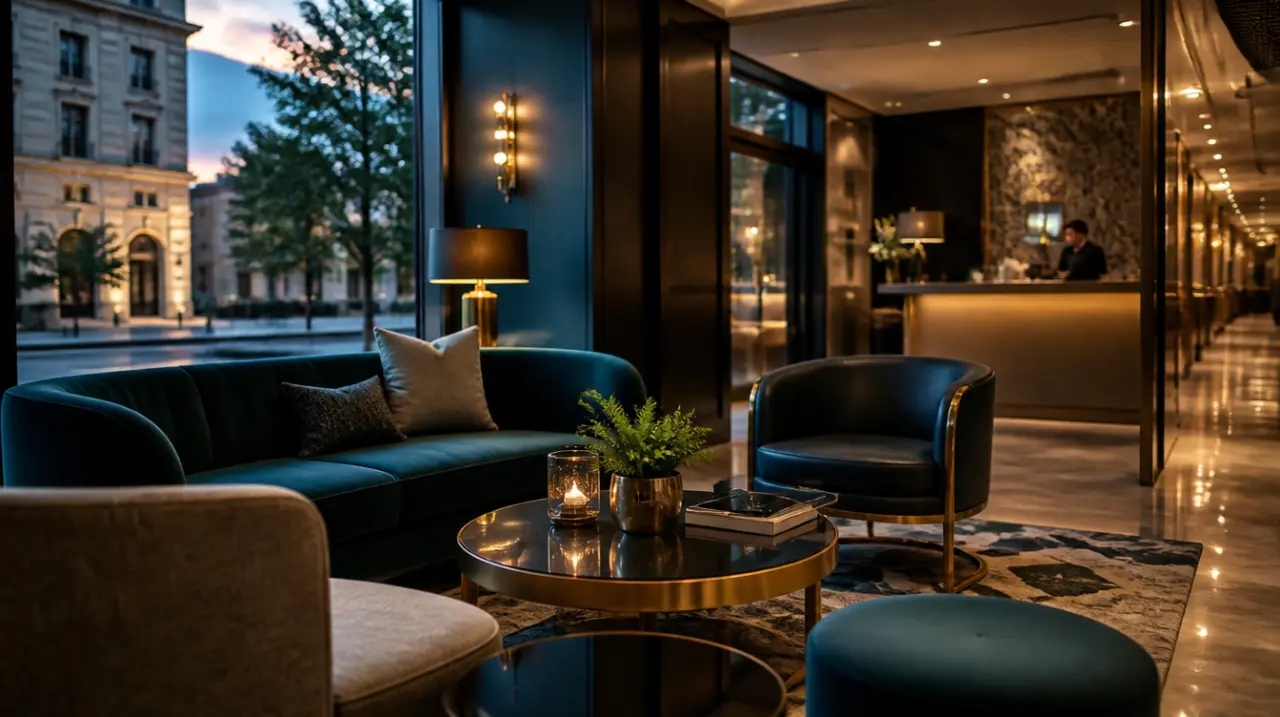
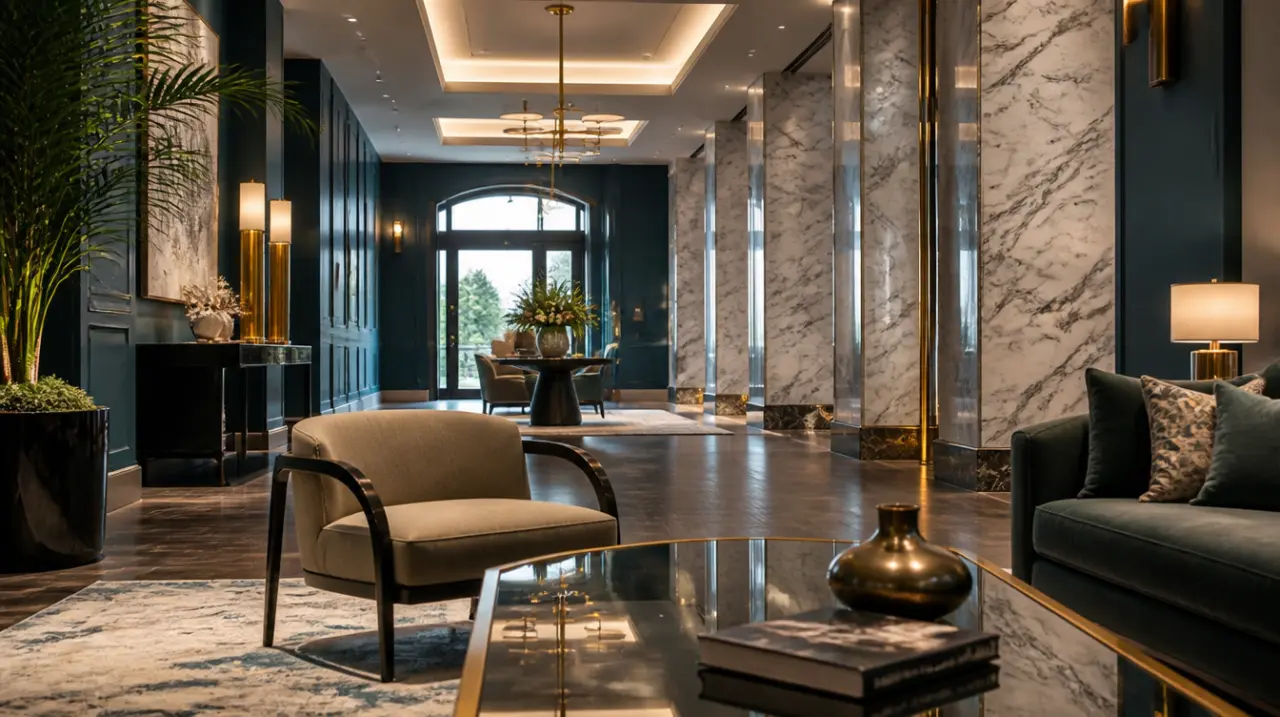
Public spaces including the lobby, lounge, and reception areas hold the highest-design, most brand-visible FF&E: statement seating, feature lighting, reception casegoods, and art that set the tone for the whole property.
Food and beverage outlets add dining seating, tables, banquette work, and, where the owner assigns it to the capital package, service and kitchen equipment.
Because the boundary around equipment is genuinely ambiguous, each area’s scope should be pinned down in a written responsibilities matrix so specification, purchasing, and installation are assigned line by line and nothing falls through the gap between FF&E and the operating supplies covered in what is OS&E in hospitality.
Brand standards drive the specification
For any franchised or managed hotel, FF&E is not a free design choice, it is a compliance exercise. The brand publishes standards that dictate acceptable products, finishes, and quality levels, and the owner’s FF&E package must satisfy them. Brands audit properties against these standards and use a property improvement plan to require FF&E replacement when a hotel falls behind. This is why brand-standard revisions mid-project are a recurring cause of FF&E budget overruns: a changed standard can force a re-specification and re-buy of items already in the pipeline. The American Hotel and Lodging Association is the trade body that anchors much of the professional context around these operating and brand relationships.

Budgeting by cost per key
Hospitality sizes FF&E using cost per key, the total FF&E spend divided by the number of guestrooms, which makes it easy to compare projects and underwrite deals. The metric is useful but treacherous. The ISHC calls it the most dangerous question in hotel capital planning, because the number is only meaningful once its scope is stated: whether it covers guestrooms only or also bathrooms, corridors, public space, and food and beverage, and whether it includes soft costs such as design, purchasing fees, freight, warehousing, and installation. A quoted cost per key with no scope behind it is a number that cannot be trusted for underwriting.
Reserves and the replacement cycle
A hotel’s FF&E does not last the life of the building, so owners often fund replacement through an FF&E reserve. Many management, franchise, and loan agreements use a percentage of gross revenue that steps up during the early operating years and may reach roughly 3 to 5 percent at stabilization; the executed documents control the actual rate and permitted uses. Replacement cycles vary by brand, market, condition, and item, so reserve funding should be tested against a property-specific capital plan rather than treated as proof that future renovations are fully funded.
The FF&E lifecycle in an operating hotel
FF&E has a life that begins long before a guest sees it and ends when the asset can no longer meet the standard. In the specification phase the interior designer selects and documents each item to the brand standard. In procurement it is priced, ordered, expedited, and warehoused. At installation it is set room by room against the construction turnover. Then it enters service, where daily guest use and cleaning steadily degrade it. Soft goods fade and wear first, which is why textiles, upholstery, carpet, and case finishes are refreshed on a shorter cycle of roughly six to seven years, while casegoods and hard furniture carry a longer replacement horizon. Eventually the property falls behind its standard or its market, a renovation or property improvement plan is triggered, and the cycle restarts. Planning FF&E as a lifecycle rather than a purchase is what lets an owner budget for the next refresh before the current one becomes a competitive liability.
FF&E and asset value
Because FF&E is capitalized and conveyed with the property, it is also part of what an owner buys and sells. In an acquisition the purchase agreement typically attaches an FF&E schedule that itemizes the movable assets included in the sale and their value, so buyer and seller agree on exactly what is changing hands. The condition and age of that FF&E feed directly into the deal, because a buyer inheriting tired furniture is really inheriting a near-term renovation obligation, and will price the asset accordingly. Well-maintained, brand-current FF&E supports the room rate and the valuation, while deferred replacement shows up as a discount and an immediate capital call. This is the ultimate reason hospitality treats FF&E with such discipline: it is not only what the guest experiences today, it is a line in the asset’s value the day it trades.
From definition to execution
FF&E in hospitality is the throughline from design intent to guest experience to asset value. It is specified in interior design, bought in the FF&E procurement process, installed on the construction schedule, and replaced on cycle through reserves and property improvement plans. An owner who treats it as a managed asset class, budgeted, reserved, and refreshed on a plan, protects both the guest experience and the value of the property, while one who treats it as a one-time purchase inherits a renovation bill and a competitive gap. To keep the durable and consumable categories cleanly separated as you plan, work from FF&E vs OS&E alongside this guide.