There is no universal law that says a drapery track belongs to construction and a drapery panel belongs to FF&E. There is only a decision, and the projects that go badly are the ones where nobody made it in writing. FF&E, meaning furniture, fixtures and equipment, is treated as a distinct development cost category on hotel projects, sitting alongside land, hard construction costs, soft costs and pre opening expense. The HVS U.S. Hotel Development Cost Survey reflects that, and notes that construction and FF&E procurement firms are the best sources of reliable cost input for a specific project. Categories that clean on a summary sheet are considerably messier at item level, which is what this page is about. It sits alongside how to build an FF&E budget and the wider question of what FF&E means in construction.
Why the boundary exists at all
The two budgets are funded, contracted and drawn down differently. Hard construction cost is bought under one contract with a general contractor, priced from architectural documents, and paid against monthly valuations with retention. The FF&E budget is bought under dozens of purchase orders, priced from a spec book, and paid against production milestones. Different money, different timing, different accounting treatment and often different lenders’ tests.

That is why an item that drifts between the two is expensive. A drapery track that everyone assumed was in the construction contract, and that the contractor priced as excluded, does not appear later at the same cost. It arrives as a late variation with a mark up, or as an unbudgeted purchase order, plus whatever the schedule slip costs.
The underlying instinct for drawing the line is the fixture test from property law: the degree and purpose of attachment, whether the attachment is permanent or indefinite, and whether removal would cause substantial damage. Items affixed to enhance the building tend to belong to construction. Items resting in place to serve their own use tend to belong to FF&E. That instinct gets the easy cases right, which is roughly ninety per cent of the schedule. It is useless on the dozen items that actually get argued about, because those items are attached and loose at the same time.
The boundary map
The following items account for most FF&E budget disputes on hospitality projects. The right hand column is not a rule; it is the decision most teams reach when they think about it, and the point is to reach it before the bid rather than after.

| Item | Why it is contested | Common resolution |
|---|---|---|
| Drapery hardware and tracks | Fabric is FF&E, the track is fixed to the structure | Track and blocking to construction, panels and sheers to FF&E, with a written fixing responsibility |
| Blackout blinds and roller shades | Function is architectural, appearance is design | Usually FF&E where they are decorative, construction where they are integrated in a bulkhead |
| Decorative light fittings | Bought for design control, wired by the electrical trade | Fitting to FF&E, wiring and connection to construction, install labour named explicitly |
| Architectural and recessed lighting | Not a design selection in the same sense | Construction |
| Portable and table lamps | Plugged in, not fixed | FF&E |
| Built in wardrobes and closets | Site built joinery that looks like furniture | Construction as millwork |
| Freestanding casegoods | Factory built to a repeatable drawing | FF&E |
| Reception and bar millwork | Site built, scribed to the building | Construction, with loose stools to FF&E |
| Broadloom carpet and pad | Adhered to the floor structure | Usually construction, though some owners buy it in FF&E for design control |
| Loose area rugs | Rest on the floor by their own weight | FF&E |
| Bathroom accessories | Fixed into tile, selected by the designer | Split by fixing: hard fixed to construction, loose to FF&E or OS&E |
| Guest room televisions and mounts | Operating equipment fixed to a wall | Set to FF&E, mount and bracket resolved with the fixing responsibility |
| Signage and wayfinding | Sits between design, construction and operations | Named explicitly on its own line, in either budget, never assumed |
| Artwork and mirrors | Loose goods requiring structural fixing | Goods to FF&E, fixing to construction under an OFCI arrangement |
| Kitchen and laundry equipment | Heavy, serviced, fixed | Usually a separate FF&E sub budget or its own equipment contract |
| Fitness equipment | Bought like equipment, delivered like furniture | FF&E, with power and floor loading coordinated into construction |
Window treatments

Drapery is the classic split scope item, and it is worth working through because the pattern generalises.
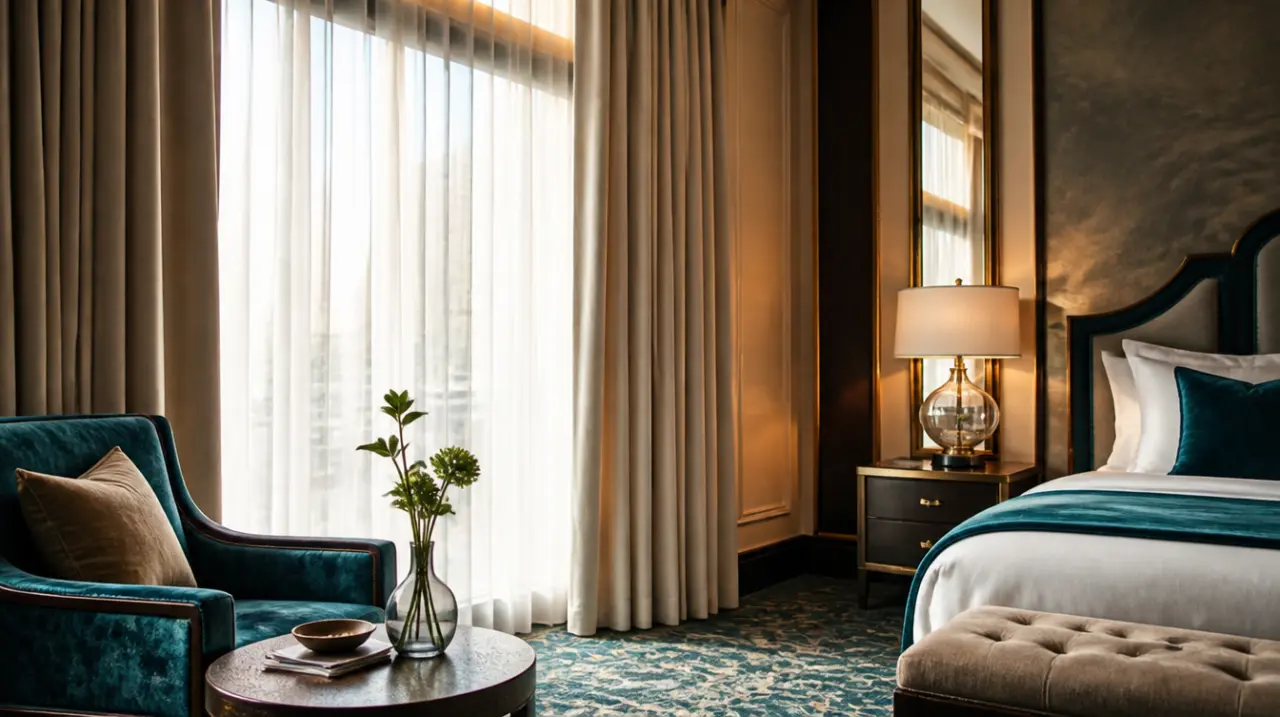
A guest room drapery package contains a decorative panel, a sheer, a lining, a track or pole, brackets, a pelmet or a recessed pocket, and the blocking that carries the load. The panel is unambiguously FF&E. The pocket, if the ceiling is detailed with one, is unambiguously construction. Everything in between is a decision.
The workable convention is that anything fixed to the structure goes to construction and anything that hangs from it goes to FF&E. That gives the contractor the pocket, the blocking and often the track, and gives the FF&E package the panels, sheers and linings. It aligns responsibility with access: the trades that own the wall install the things that go into it.
Where it goes wrong is when the track is a decorative item in a finish that matters, at which point buying it through construction means the contractor is buying a design item from a supplier they have never used. The answer is not to move the boundary but to name it: track supplied by FF&E, installed by the contractor, blocking by the contractor, with the fixing detail on the shop drawing. Whatever is decided, the drapery line has to appear once and only once across the two budgets.
Lighting
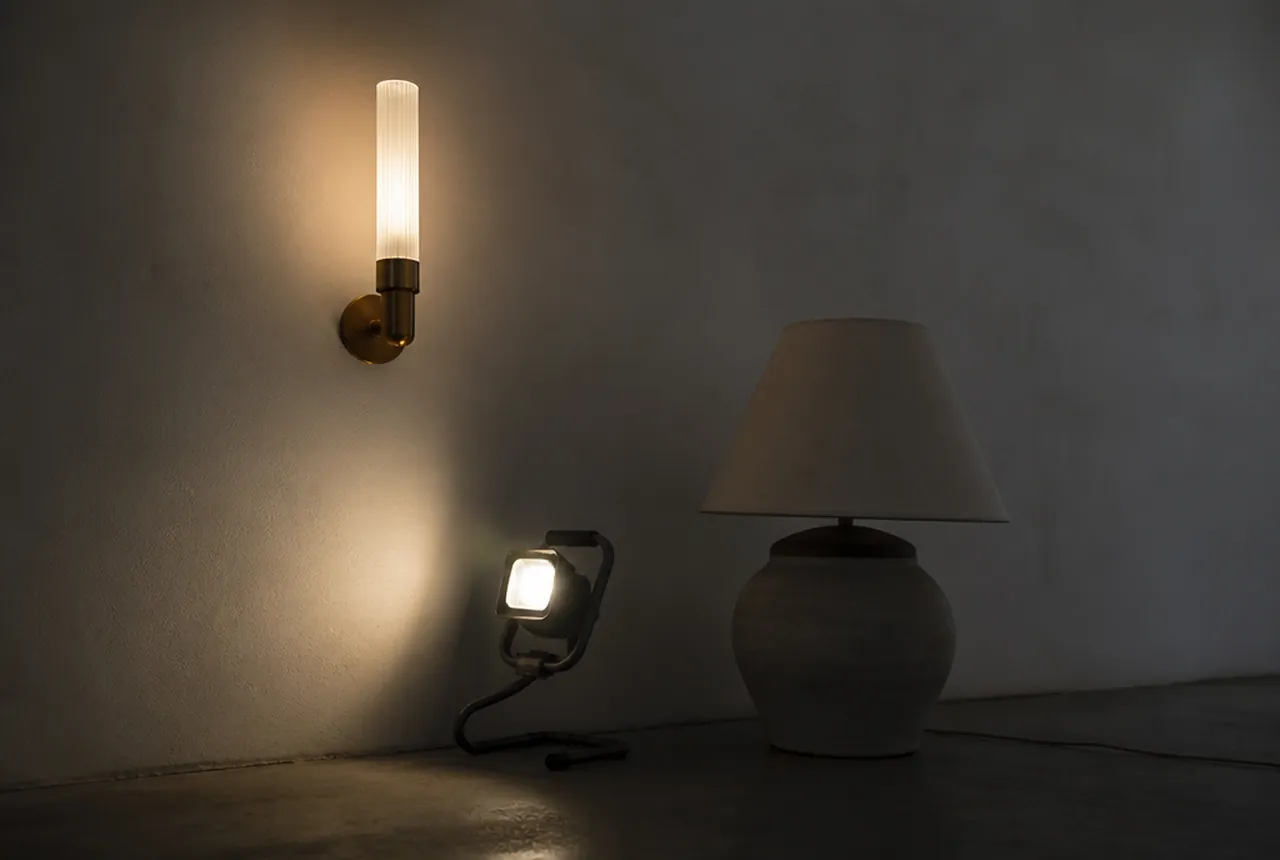
Lighting splits three ways rather than two, which is why it produces more argument than drapery.
Architectural lighting, meaning downlights, cove lighting, emergency and exit fittings and anything integrated into the ceiling or the joinery, is construction. Nobody disputes this.
Portable lighting, meaning table lamps and floor lamps that plug into a socket, is FF&E. Nobody disputes this either.
Decorative lighting, meaning pendants, chandeliers, wall sconces and bedside reading lights, is the contested middle. These are selected by the interior designer, often custom, often imported, and they are hard wired. Buying them through construction gives the contractor a design procurement job they are not set up for. Buying them through FF&E gives the owner design and cost control but creates an owner furnished, contractor installed item that must be delivered against the electrical trade’s programme rather than the furniture install programme.
Most hospitality teams buy decorative lighting in the FF&E budget and install it through construction. The discipline is then delivery timing: the fittings have to be on site while the electrician is still there, usually months before the loose furniture arrives.
Casework and millwork
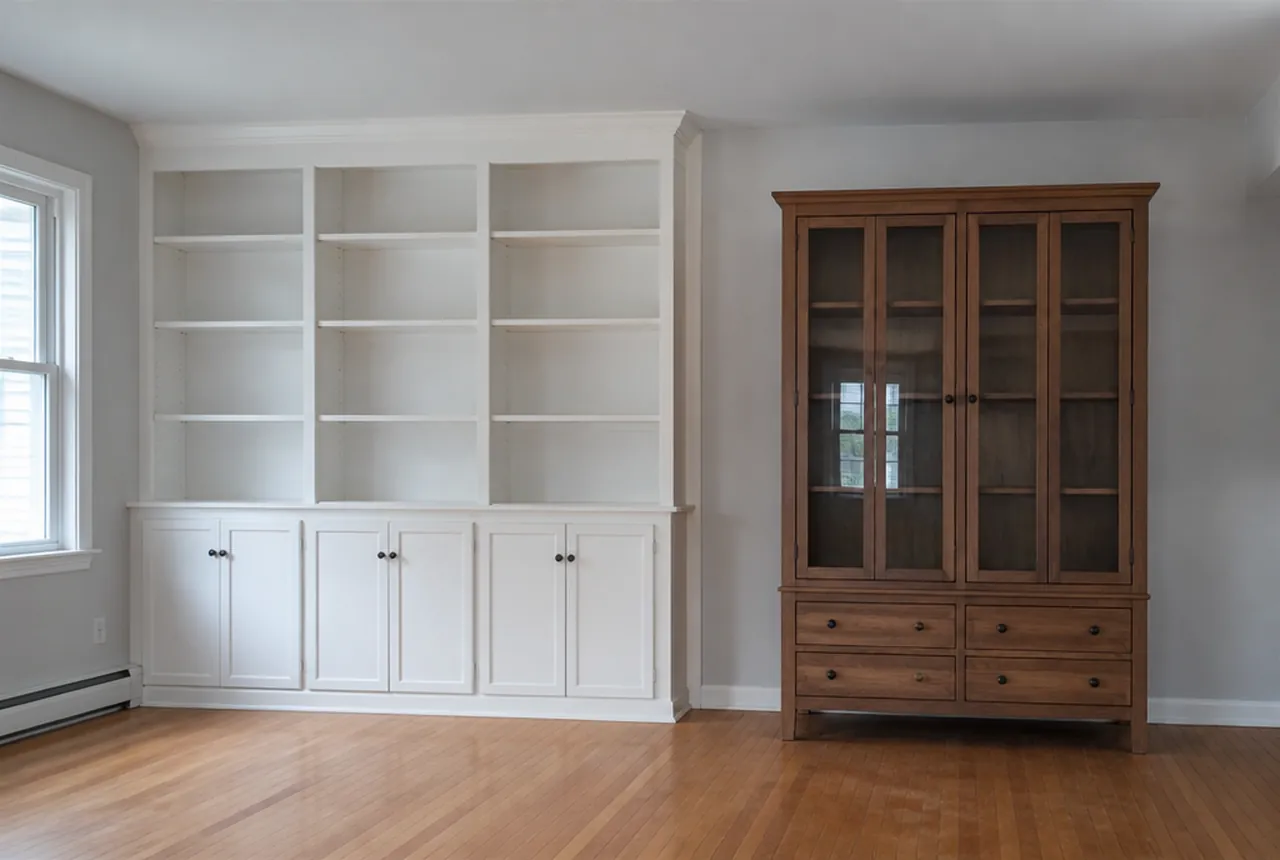
The millwork boundary is the largest single number in this argument, because on a guest room heavy project the same wardrobe can be a site built joinery item in the construction contract or a factory built casegood in the FF&E package, and the cost difference is material.
Millwork is procured under the construction contract, built by a joinery shop to site dimensions, scribed and fixed in place, and warranted by the contractor. A casegood is procured under the FF&E package, built in a furniture factory to a repeatable drawing, shipped and set in place. Neither is inherently better. Millwork fits imperfect buildings and can absorb dimensional variation; casegoods benefit from factory conditions, repeatable quality and volume pricing across hundreds of identical rooms.
What matters is that the decision is made once, room type by room type, before either package is priced, and recorded on a document both contractors read. The failure pattern is a wardrobe that appears in the architect’s joinery schedule and the designer’s FF&E schedule, gets priced twice, then gets deleted from the wrong one under budget pressure.
Floor coverings and rugs
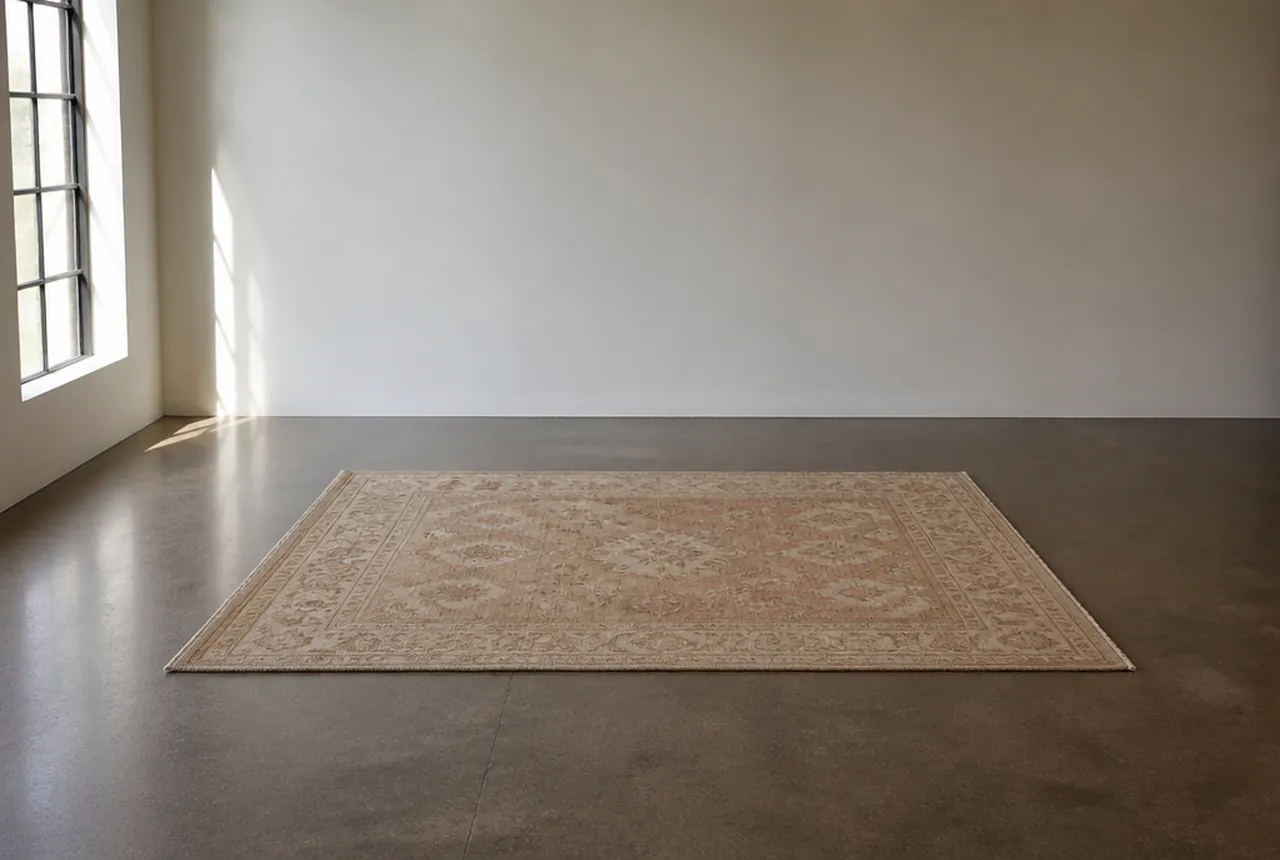
Broadloom carpet, carpet tile and hard flooring are normally construction, because they are adhered to the structure and installed by flooring trades working to the construction programme. Loose area rugs are normally FF&E, because they rest in place, are selected as design items and are installed with the furniture.
Two complications recur. The first is that some owners deliberately buy corridor and public area carpet through the FF&E package to keep design control and to use the purchasing agent’s mill relationships. That is legitimate, but it moves a large number, and it must move with the install labour, the underlay and the accessories, not just the goods. The second is the pad or underlay itself, which is quietly forgotten in a great many budget splits and which nobody wants to own at the last minute.
Settling the map before the bid

The boundary map is not a document that survives being written once and filed. It has to be produced early, agreed by the owner, the designer, the general contractor and the purchasing agent, and reissued whenever the design changes. Two practices make it stick.
First, use a single item register with one column that names the budget and a second that names the installer. Every line has both values filled in. No line says “TBC” after the bid documents are issued. An item with a blank cell is a change order in waiting.
Second, express the FF&E side of the map in cost per key, meaning total category cost divided by the number of guest rooms, as covered in hotel cost per key explained. It is the fastest way to notice that a boundary has quietly moved, because a category that jumps between estimates usually means an item crossed the line rather than that furniture got more expensive.
Finally, hold a contingency on both sides rather than one, since boundary corrections tend to move money in both directions across the life of a project. The sizing logic for that buffer is set out in FF&E contingency and budget buffers. Experienced hospitality advisers, including consultants represented by bodies such as the International Society of Hospitality Consultants, tend to run this map as a standing item at every design review, on the simple grounds that the map is cheap and the arguments are not.